
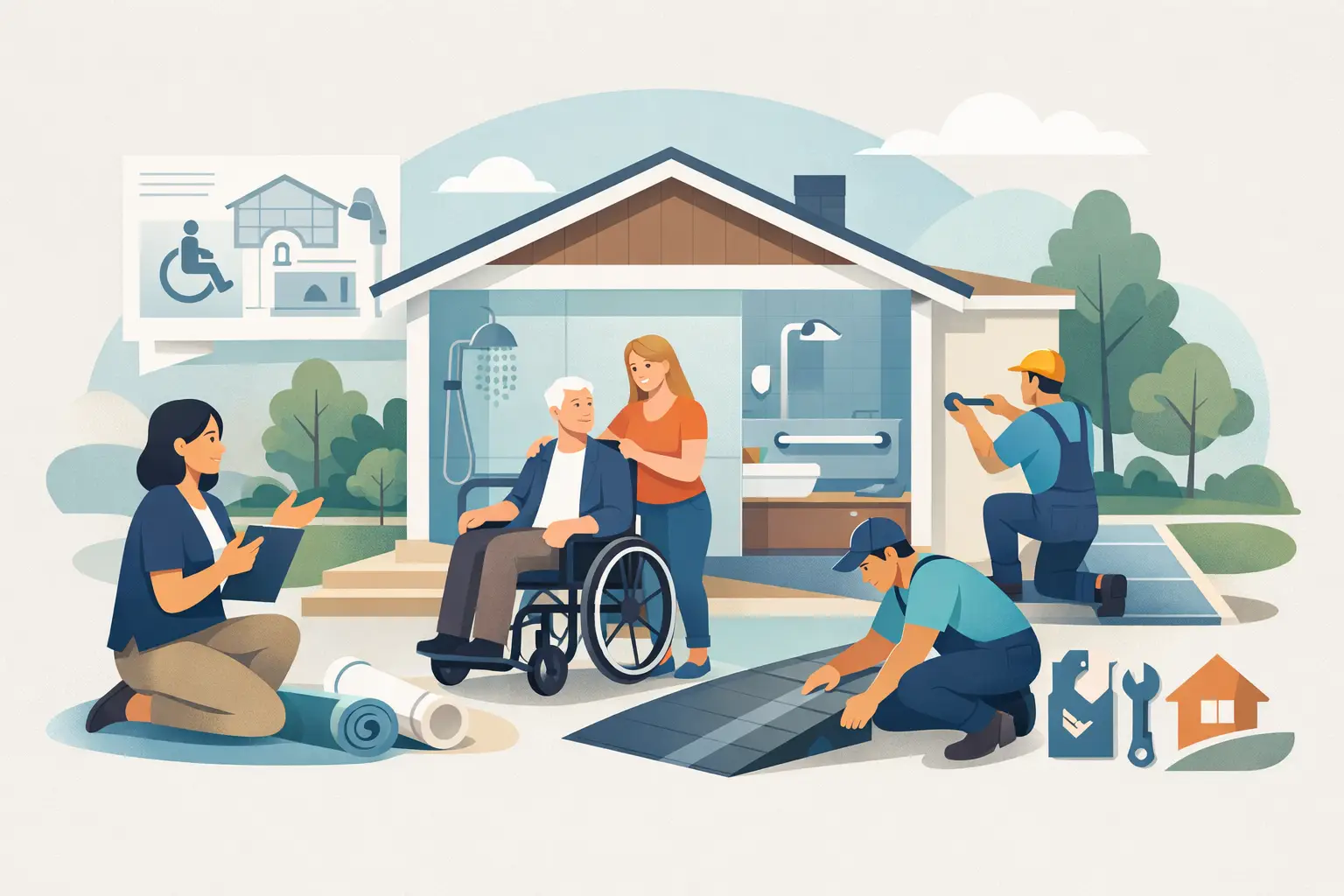
A shower step that has become unsafe, a doorway too narrow for a wheelchair, or a front entrance with stairs can turn ordinary daily routines into major barriers. If you are asking, does NDIS cover home modifications, the short answer is yes, it can - where the changes are directly related to a participant’s disability and meet NDIS funding criteria.
The more useful answer is that funding depends on the person, the home, the modification needed and the evidence supporting it. Home modifications are not simply renovations. They are changes designed to improve safety, access and independence in the place a participant lives.
Does NDIS cover home modifications in Australia?
The NDIS may fund home modifications that are considered reasonable and necessary. In practical terms, this means the modification should relate to the participant’s disability, help them pursue goals or take part in everyday life, represent value for money, and not be a cost another system or the household would ordinarily cover.
Funding can apply to relatively straightforward changes, such as grab rails, handrails, lever taps or minor ramps. It can also apply to more complex work, including accessible bathroom alterations, widened doorways, kitchen changes, ceiling hoists, platform lifts and access ramps.
What is funded is individual. A bathroom modification that allows someone to shower safely and privately may be appropriate for one participant, while a general bathroom refresh, new tiles chosen for appearance, or repairs unrelated to disability access are unlikely to be funded.
The NDIS generally looks at the functional outcome. The question is not only whether a modification would be helpful, but whether it will make a meaningful difference to how the participant moves around, manages personal care, lives safely or receives essential support at home.
The difference between modifications and ordinary home costs
It helps to separate disability-related changes from the costs of owning, renting or maintaining a home. The NDIS is not responsible for general household repairs, routine maintenance, standard appliances or improvements that would be expected in any home.
For example, replacing a leaking roof, repainting a room or repairing worn flooring would usually sit with the homeowner or landlord. However, installing non-slip flooring in a specific area because of a documented disability-related safety need may be considered differently.
Sometimes a project includes both funded and non-funded work. If an accessible bathroom requires walls to be moved, the NDIS may consider the disability-related elements, while the household may need to pay for upgrades or finishes beyond what is required for access and safety. Asking for clear, itemised quotes early can prevent confusion later.
What home modifications might be funded?
The right modification starts with the participant’s daily life, not a catalogue of products. An occupational therapist may assess how a person transfers in and out of bed, prepares meals, uses the bathroom, enters the property or moves through narrow spaces.
Common modifications may include:
- external ramps, handrails and safer entry points
- bathroom changes such as accessible showers, rails, shower seating and altered layouts
- widened doors, altered thresholds and circulation space for mobility aids
- kitchen alterations that improve reach, clearance and safe meal preparation
- lifts, hoists or other specialised access solutions where assessed as necessary.
A modification should suit both current needs and likely future needs where this can be reasonably anticipated. That said, the most extensive option is not automatically the best option. A portable aid, different support arrangement or smaller change may meet the same need at lower cost and with less disruption.
Assessment comes before building work
For anything beyond a simple modification, an occupational therapy assessment is usually a key part of the process. The occupational therapist, often called an OT, considers the participant’s disability, functional needs, goals, home layout, support arrangements and safety risks.
Their recommendation may explain why a modification is needed, what options were considered and why the proposed approach is suitable. For complex projects, further design work, building advice, approvals and project management may also be needed.
This step can feel slow when access is urgently needed, but it protects the participant from work that is poorly designed or unsuitable. A ramp with the wrong gradient, for example, can create a new risk rather than solve one. Good assessment also gives the NDIA the evidence it needs to make a decision.
Avoid arranging major work before funding has been confirmed. A participant or family may be left responsible for the cost if a builder starts before the necessary NDIS approval is in place.
Quotes and provider choice
Once the recommended scope is clear, quotes are usually requested from suitable providers. The quote should describe the work in enough detail for the participant, planner or support coordinator to understand what is included. It should also identify any separate costs that are not being claimed from the NDIS.
The way a participant manages their funding matters. Participants whose plans are NDIA-managed generally need to use appropriately registered providers for supports that require registration. Self-managed and plan-managed participants may have more choice, but providers should still have relevant qualifications, insurance, licences and experience in accessible modifications.
For families comparing providers, it is worth asking about similar projects, communication during construction, timeframes, warranties and how the provider manages changes to scope. The lowest quote is not always the best value if it omits essential work or lacks disability-access expertise. Disability Providers can help participants and carers search for relevant providers by service type and location when they are ready to compare options.
Renting, shared homes and property approval
Home ownership does not automatically determine whether a modification can be considered, but permission to alter the property is a practical requirement. Renters will generally need written consent from their landlord or property manager. Participants living with family may need agreement from the homeowner, while people in shared accommodation need to consider how changes affect other residents.
It is wise to discuss consent early, before detailed plans or quotes are commissioned. Some landlords are open to changes that improve the property’s accessibility, while others may have concerns about restoration, construction or future tenants.
The NDIS will also consider whether the proposed home is suitable for the participant’s needs. If a person is likely to move soon, a costly permanent modification may not be the most practical solution. In some circumstances, portable equipment, a less permanent change or exploration of different housing options may better meet the participant’s goals.
Home modifications are not the same as SDA
Specialist Disability Accommodation, known as SDA, is housing designed for people with very high support needs or extreme functional impairment. It is a separate NDIS support from home modifications.
A participant does not need SDA funding to receive a home modification, and most people receiving home modification funding do not live in SDA. The distinction matters because SDA relates to the dwelling itself and has specific eligibility requirements, whereas home modifications focus on making a participant’s current home safer and more accessible.
If an existing home cannot reasonably be adapted, or if the required changes would be exceptionally extensive, the participant may need advice about housing pathways as part of broader planning. This is a situation where an experienced support coordinator, OT or housing provider can help clarify the options.
How to prepare for an NDIS request
Start by recording the day-to-day issue in clear terms. Rather than only saying a bathroom needs changing, describe what happens now: whether the participant needs two people to assist with showering, cannot enter the shower safely, has fallen, or cannot use the facilities independently.
Then gather the evidence that explains the solution. This may include an OT report, photographs or measurements of access barriers, quotes, landlord consent and information about how the participant uses the home. The stronger the connection between the barrier, the disability-related need and the proposed outcome, the easier it is to understand the request.
If the current plan does not contain enough funding, speak with the participant’s LAC, support coordinator or NDIA contact about whether a plan reassessment or change of circumstances may be appropriate. Where there is an immediate safety risk, explain the urgency and keep records of incidents, near misses and professional advice.
Home modifications can take time because they involve assessment, funding decisions, property consent and construction. Beginning the conversation before a situation becomes a crisis gives everyone more room to consider safe, workable choices.
A well-planned change to a home can do more than remove a physical barrier. It can make space for privacy, reduce reliance on others and help a participant feel more at home in the place where everyday life happens.
Share on