
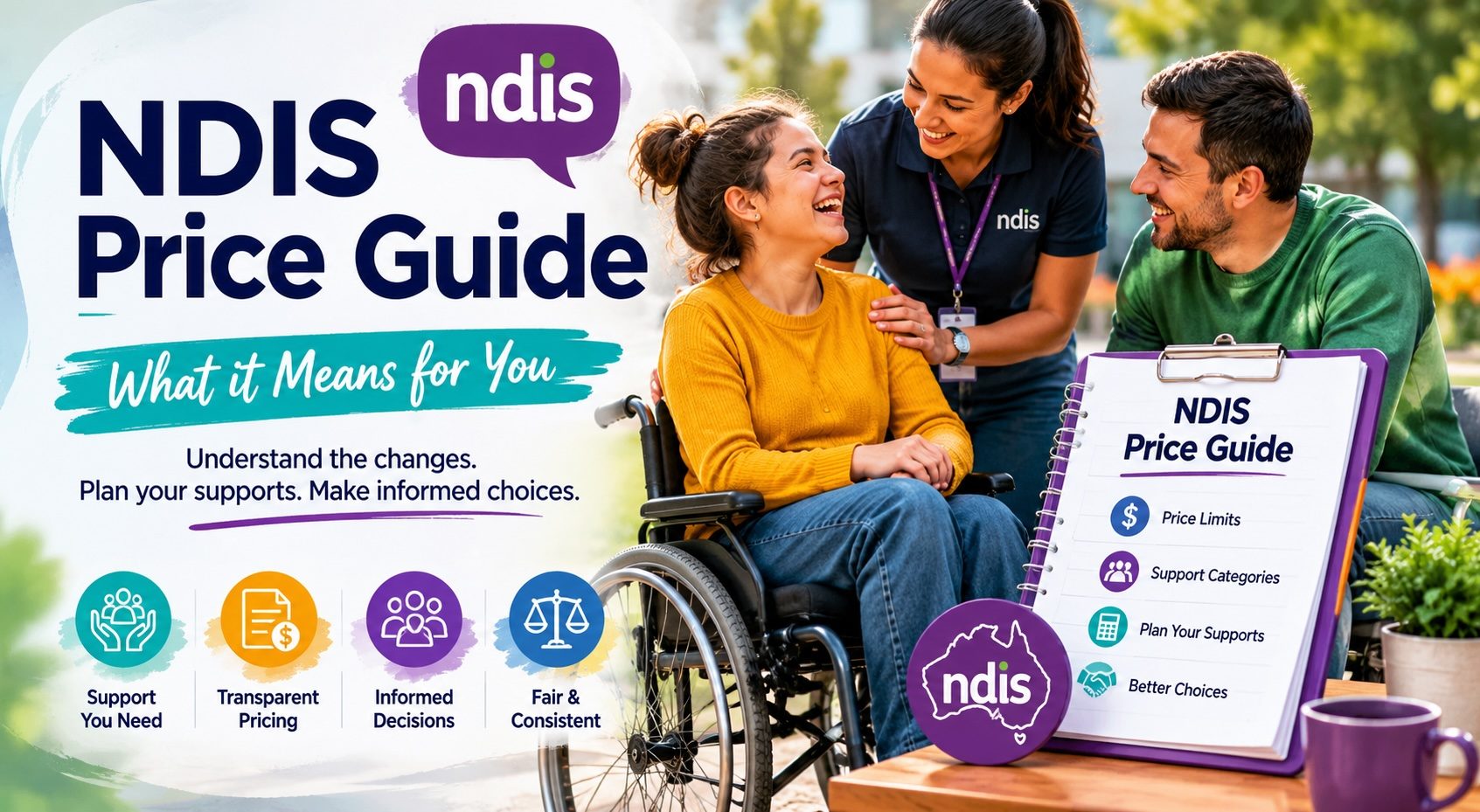
If you have ever looked at an NDIS service invoice and wondered why one support line costs what it does, you are not alone. The NDIS price guide has long been one of the most searched and most misunderstood parts of the scheme because it affects budgets, provider claims, service agreements and everyday decision-making.
For participants, families and carers, pricing matters because it shapes how far a plan can stretch. For providers, it matters because it sets the framework for claiming, charging and staying compliant. While the language around NDIS pricing can feel technical, the core idea is simple: the guide sets rules and price limits for many funded supports so participants are charged fairly and providers know what they can claim.
What the NDIS price guide actually does
The NDIS price guide is the document that outlines how much registered providers can charge for many supports, along with the conditions attached to those charges. In more recent NDIS language, you will also hear people refer to the Pricing Arrangements and Price Limits. Many people still use the older term because that is what participants, families and providers have known for years.
At a practical level, the guide is there to create consistency. It helps stop major price differences for the same support and gives the sector a reference point for what is considered a reasonable charge under the scheme. It also explains whether support can include things like travel, provider non-face-to-face time, cancellations or loading for weekends and public holidays.
That means the guide is not just a price list. It is also a rulebook. Two supports may look similar on the surface, but the claiming conditions can be quite different depending on the support item, the setting and the participant’s circumstances.
Why pricing rules matter so much
Small pricing differences add up quickly across a full plan year. If a participant uses regular personal care, therapy, support coordination, transport-related supports or community access, the way those services are priced can have a direct impact on how long funding lasts.
This is why it helps to understand the difference between a provider’s advertised rate and what the scheme allows. A registered provider generally cannot charge above the relevant NDIS price limit for a support that is subject to those caps. An unregistered provider may have more flexibility in some situations, particularly for self-managed participants, but the support still needs to represent value for money and be consistent with NDIS funding rules.
For families comparing providers, this is often where confusion starts. The hourly rate is only one part of the picture. Availability, qualifications, cancellation policies, service quality, communication and fit with the participant’s goals matter just as much.
What you will usually find in the NDIS price guide
Most people go looking for one number, but the guide usually gives more context than that. It generally includes support item numbers, descriptions, unit prices and any special conditions that affect claims.
You may also see different rates based on the day or time the service is delivered. For example, weekday daytime support can be priced differently from evening, Saturday, Sunday or public holiday support. That reflects the real-world cost of staffing and service delivery.
The guide can also set out whether a provider can charge for travel, how short-notice cancellations work, and when non-face-to-face activities are claimable. These details matter because they can affect the true cost of a service arrangement over time.
Understanding price limits without getting lost in jargon
A useful way to think about price limits is this: they are a ceiling, not a standard fee that every provider must charge. Some providers charge at the maximum rate. Others charge below it.
That distinction matters for participants who want to make their budget go further. A lower hourly rate may create more flexibility across the life of a plan, especially if the participant uses support often. On the other hand, the cheapest option is not always the best fit. A provider with specialised experience, strong communication and reliable staffing may deliver better value even if their price is at or near the cap.
Providers also need to read price limits carefully because not every support item is interchangeable. Using the wrong item number, applying the wrong time band or adding charges that are not permitted can lead to billing issues and participant complaints.
How participants and families can use the guide
For participants, the most practical use of the NDIS price guide is as a comparison tool. It can help you ask better questions before agreeing to services.
When reviewing a provider, it helps to check what support item they intend to use, what their hourly or unit rate will be, whether they charge travel, and how cancellations are handled. If anything is unclear, ask for it in writing as part of the service agreement. This is particularly important if your plan is plan-managed or self-managed, where you may have more choice over who delivers supports.
It also helps to look beyond the rate itself. A provider who clearly explains their pricing, service scope and booking terms often gives families more confidence than one who simply quotes a number. Transparency is a good sign.
If you are comparing providers through a directory, detailed profile information can make this process easier. Being able to filter by service type, location, accessibility features or special expertise gives families a stronger starting point before they begin discussing fees and availability.
What providers need to watch closely
For providers, the guide affects more than invoices. It shapes service design, rostering, agreements, claiming practices and participant communication. If pricing is not explained clearly at the start, misunderstandings can damage trust even when the provider has followed the rules.
Good practice means matching the support item correctly, applying the right rate for the time of day or day of week, and being upfront about any additional claimable components such as travel where permitted. It also means reviewing updates whenever NDIS pricing changes. Rates and conditions are not static, and relying on outdated assumptions can create avoidable problems.
There is also a commercial side to this. Participants and families increasingly compare providers on clarity as well as care quality. A provider profile that clearly outlines specialities, support categories, service areas and key operational details makes it easier for people to understand whether the service is a fit before they enquire.
Common misunderstandings about the NDIS price guide
One common misunderstanding is that every support has a fixed price. In reality, many supports have a maximum price, but the actual fee can still vary below that limit.
Another is that all providers charge exactly the same way. They do not. Two providers may both comply with NDIS rules but structure bookings differently, have different minimum hours, or approach travel and cancellations in different ways.
There is also confusion between registered and unregistered providers. Registration status can affect pricing obligations in some contexts, but it does not remove the need for services to be reasonable, properly documented and aligned with participant funding.
A final point is that the guide does not replace judgement. Pricing compliance matters, but so do service quality, cultural fit, communication, safeguarding and outcomes.
How to compare providers using pricing information
When families compare disability services, it helps to start with support type and suitability, then move to pricing detail. A provider may appear affordable at first glance, but if they lack relevant experience, have limited availability or cannot deliver in your area, the lower rate may not translate into better value.
A better approach is to compare four things together: the support offered, the provider’s experience, the terms of service, and the likely impact on your budget. This gives a more complete picture than price alone.
For providers, this is why clear visibility matters. On a specialised directory such as Disability Providers, strong profile information can help bridge the gap between a price figure and the actual value of the service. Participants are rarely choosing based on numbers alone. They are choosing based on whether a provider feels credible, relevant and accessible.
NDIS price guide changes and why they matter
NDIS pricing settings can change over time in response to market conditions, workforce pressures and policy decisions. Even modest changes can affect participant budgets and provider operations, especially in service areas with thin supply or high demand.
That is why both sides of the market need to stay current. Participants should review service agreements when pricing updates happen and check whether planned supports will still fit the budget. Providers should update internal systems, staff guidance and public-facing information so there is no gap between what is quoted and what can actually be claimed.
The most useful mindset is to treat the guide as a live operating document rather than something you read once and forget. When you understand how pricing works, it becomes easier to compare services fairly, plan with confidence and have clearer conversations from the start. In a system where trust and transparency matter, that makes a real difference.
Share on