
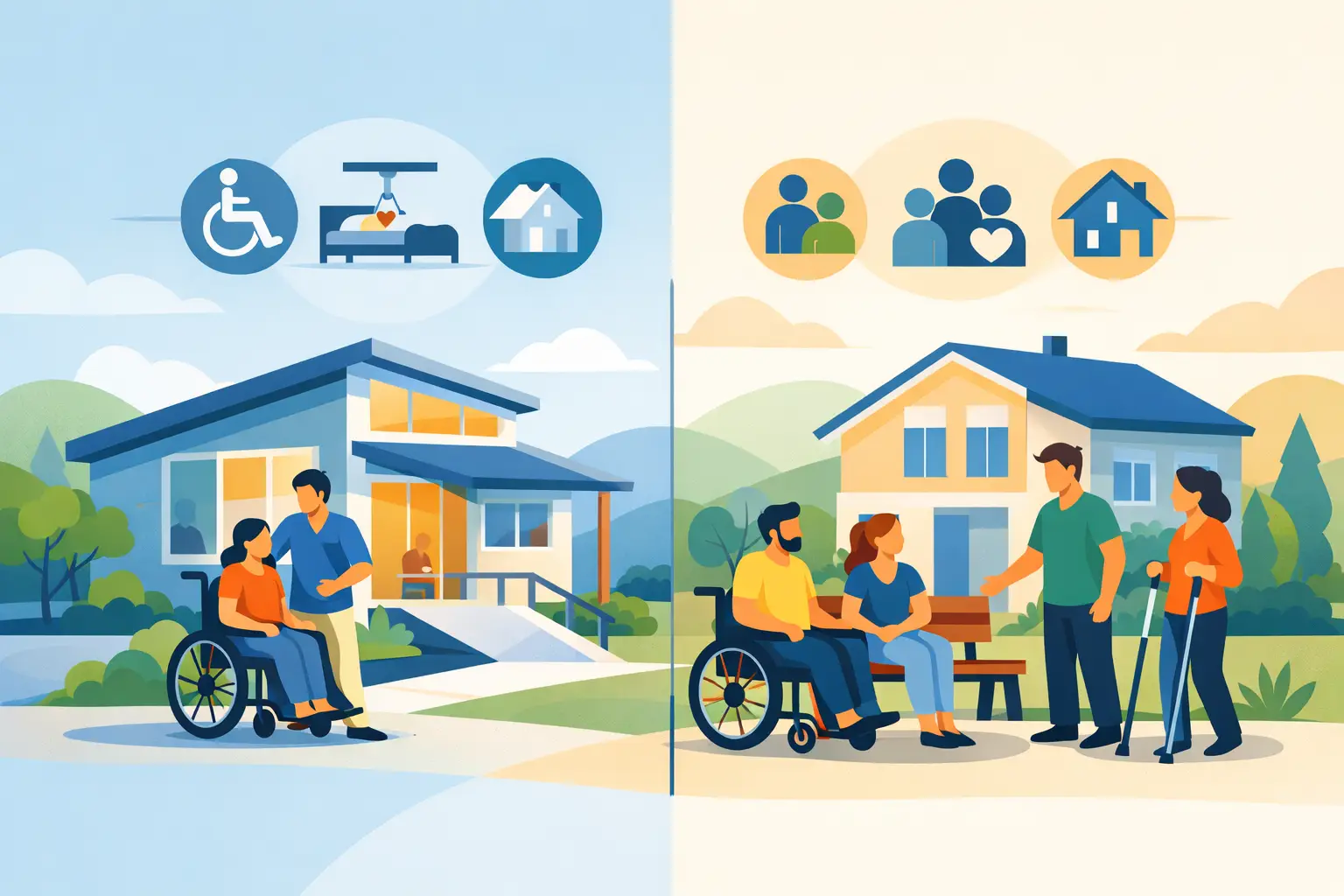
A home can be both a place to live and a major part of a person’s support plan. That is why the question of SDA versus SIL housing matters: these two NDIS funding types can work together, but they pay for very different things. Understanding the distinction can help participants, families and support coordinators make decisions based on the person’s needs, preferences and long-term goals.
SDA versus SIL housing: the key difference
Specialist Disability Accommodation (SDA) funds the home itself. It is designed for eligible NDIS participants who need specialist housing features or a particular type of dwelling because of extreme functional impairment or very high support needs. This could include a home with wide doorways, accessible bathrooms, ceiling hoists, reinforced walls for assistive technology, or on-site overnight support arrangements.
Supported Independent Living (SIL) funds the support workers who assist a person at home. It may cover help with everyday activities such as personal care, cooking, household tasks, building daily living skills and support to make decisions. SIL is generally used by people who need significant support throughout the day, and sometimes overnight.
Put simply, SDA relates to the bricks, layout and specialist features of a property. SIL relates to the people providing daily support within a home. Neither term automatically includes the other.
Can you receive SDA and SIL funding together?
Yes. A participant may live in an SDA home and receive SIL supports there. For example, someone may need an accessible home with a fully adjustable bathroom and overnight assistance from support workers. SDA funding can contribute to the specialist accommodation, while SIL funding can pay for the rostered supports they need to live there.
However, it depends on the individual plan. Some people approved for SDA do not require SIL. They may live independently, receive drop-in supports, use assistive technology, or receive help through another arrangement. Others may receive SIL while living in a standard rental, a family home, social housing or another type of accommodation that is not SDA.
This is an important point when comparing vacancies. An available SDA bedroom does not necessarily mean it is suitable for a person’s support needs, household preferences or funding. Likewise, a SIL provider may support a participant in a home they already live in, subject to the provider’s service model and the participant’s plan.
What SDA funding can cover
SDA funding is paid to the registered SDA provider for the eligible dwelling. It helps make specialist housing available for people who need it. SDA homes are usually categorised by the level and type of design needed, including Improved Liveability, Fully Accessible, Robust and High Physical Support.
The category matters because it describes the dwelling’s features, not simply the quality or size of the home. A Fully Accessible dwelling may suit someone who uses a wheelchair, while High Physical Support housing can include features that support people with more complex physical needs, such as ceiling hoists and emergency power backup.
Participants who live in SDA generally still contribute to ordinary living costs. This may include a reasonable rent contribution and board, such as food, utilities or household expenses. These costs should be clearly explained before signing an agreement. SDA funding is not intended to cover a person’s everyday living expenses.
SDA is not available simply because finding suitable housing is difficult. The NDIS applies specific eligibility criteria, and participants usually need strong evidence that specialist housing is reasonable and necessary for them.
What SIL funding can cover
SIL is about the support required to live as independently as possible. It often applies in shared living arrangements, where participants receive individual support alongside some shared supports, but it can also apply in other circumstances.
A SIL provider develops a support proposal, often called a quote or roster of care, that outlines the supports a person needs and when they are needed. The NDIS then considers whether the proposed support is reasonable and necessary.
SIL may include assistance with personal care, meal preparation, cleaning, routines, medication prompts where appropriate, and support to develop household and social skills. It does not usually pay for rent, groceries, holidays, day programs, transport, medical care or supports that should be funded through another system.
Because SIL is highly individual, two people living in the same home may receive different levels of funding. Their needs, goals, independence and informal supports may all differ. Shared housing should never mean a participant is expected to accept a one-size-fits-all support arrangement.
Eligibility is assessed separately
It is easy to assume that SDA approval leads to SIL approval, or vice versa. In practice, the NDIS assesses them separately.
For SDA, the focus is whether a person needs specialist housing because of their disability-related functional impairment or very high support needs. Evidence may include occupational therapy assessments, functional capacity assessments, reports from allied health professionals and information about why ordinary housing is unsuitable.
For SIL, the focus is the level of daily support a person needs to live at home. Evidence often looks at what the person can do independently, where they need assistance, the risks involved and how support will help them pursue their goals.
Participants and families may also wish to discuss other home and living options with the NDIS. Depending on the situation, this could include Individualised Living Options (ILO), home modifications, assistive technology, short-term accommodation or supports delivered in the family home. SIL is not the only pathway to a supported home life.
Choosing a home and support provider
Finding the right arrangement involves more than checking whether a vacancy is available. The property, support team and household dynamic all affect daily life. It is reasonable to take time, ask questions and involve trusted people in the process.
When considering an SDA property, ask whether its design category matches the participant’s assessed needs. Check practical details too: bedroom size, bathroom access, outdoor areas, proximity to family or community, public transport, pets, visitors and whether the location supports the person’s routines.
When considering SIL, ask how support is delivered across the day and night, how staff are matched to participants, and how individual preferences are respected. If the home is shared, it is useful to understand the current household, compatibility process, shared support arrangements and what happens if another resident moves out.
Also ask for clear information about costs. A provider should explain rent, board, utilities, any additional charges, service agreements, notice periods and how complaints or changes to support will be handled. Written information gives participants and families something practical to review before making a commitment.
Provider directories can make the search more manageable by allowing you to compare SDA housing and support providers by location, service type, accessibility features and speciality. Disability Providers helps people begin that search and make enquiries with providers that may suit their circumstances.
Planning for a change in living arrangements
Moving home or changing support arrangements can take time. It may involve gathering reports, discussing goals at a plan reassessment, requesting housing options, reviewing agreements and coordinating with providers. Starting early can reduce pressure, particularly where a current arrangement is no longer safe or sustainable.
If a participant is considering a move, it can help to record what is and is not working in their current home. This might include barriers with access, privacy, overnight safety, support consistency, relationships, distance from community or opportunities to build independence. Specific examples can make discussions with providers and planners more meaningful.
The best arrangement is not always the one with the most supports or the newest property. It is the arrangement that gives the person safety, choice, stability and a genuine sense of home. Asking clear questions about SDA, SIL and other options is a practical first step towards finding it.
Share on