
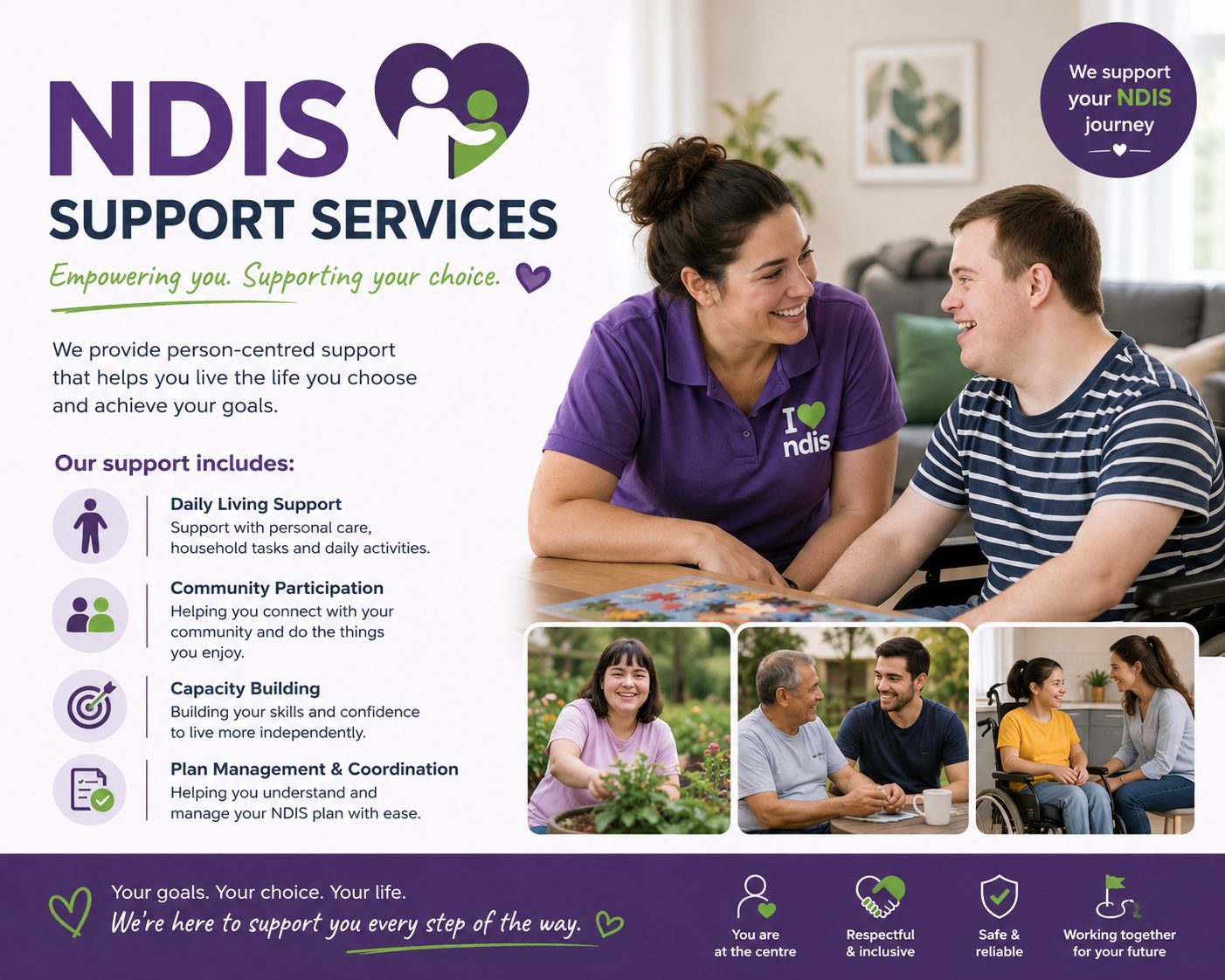
Unlocking success in business requires more than just a great idea. For NDIS and disability organisations, growth depends on reliable support services that keep operations compliant, visible, and participant-ready. Strong NDIS support services workflows improve continuity, while practical business support services and provider support services keep your back office scalable. This guide explains which support services matter most, how to choose them, and how Disability Providers—an independent NDIS provider directory in Australia not affiliated with the NDIA—helps you connect with the right partners.
What Are Support Services for an NDIS Business?
Support services are the operational, clinical, administrative, and growth capabilities that help your organisation deliver consistent participant outcomes. In the disability sector, support services can include frontline care teams, allied health, intake workflows, plan coordination, quality systems, and marketing visibility.
Strong providers treat support services as a business system—not a single hire. That mindset improves retention, reduces rework, and makes scaling safer when demand increases.
Why Essential Support Services Drive Business Growth
When support services are structured well, your business can:
- onboard participants faster with clear intake processes,
- reduce missed appointments and communication gaps,
- improve staff consistency and supervision standards,
- strengthen compliance documentation and audit readiness,
- Increase discoverability in directory and search channels.
Without essential support services, even good teams struggle with bottlenecks, unclear accountability, and uneven service quality across locations.
Core Categories of Support Services to Prioritise
Use this framework to map your current capability gaps. Most growing organisations need a blend of participant-facing and back-office support services.
1) Participant-facing support services
These are the services participants experience directly: daily living support, community access, therapy, behaviour support, respite, and transport. High-quality participant-facing support services depend on trained teams, clear rostering, and outcome-focused reviews.
2) Coordination and plan support services
Support coordination helps participants navigate providers, service transitions, and plan implementation. Even if you are not a support coordinator, your business still needs internal coordination standards so handovers stay smooth.
3) Administrative and financial support services
Reliable admin support services include intake documentation, service agreements, invoicing workflows, and claim readiness. A capable plan manager partnership can also improve payment visibility for plan-managed participants.
4) Quality, risk, and compliance support services
Compliance-focused support services protect your licence to operate. Maintain incident logs, worker screening checks, policy updates, and training records so audits become routine—not emergencies.
5) Growth and visibility support services
Growth support services include brand positioning, listing optimisation, referral partnerships, and content that answers participant search intent. Visibility is a support function because empty calendars usually trace back to weak discovery—not weak care.
How to Choose the Right Support Services Partner
Choosing providers of support services should follow the same discipline you recommend to participants: define goals, shortlist options, compare fit, then verify details before commitment.
- Document your top three business bottlenecks for the next 90 days.
- Identify which support services directly remove those bottlenecks.
- Shortlist vendors or partner organisations with relevant sector experience.
- Run a consistent comparison checklist across all options.
- Start with a pilot period and review outcomes at 30 and 60 days.
This process prevents expensive contracts that look impressive on paper but do not improve operations.
Support Services Checklist for NDIS Provider Operations
Use this 12-point checklist when evaluating essential support services for your organisation:
- Clear service scope and deliverables
- NDIS-relevant experience and references
- Defined onboarding and implementation timeline
- Named account owner and escalation path
- Reporting cadence and measurable KPIs
- Data privacy and documentation standards
- Integration with existing rostering or CRM tools
- Staff training and handover support
- Incident and complaint handling alignment
- Transparent pricing and contract terms
- Backup coverage for critical functions
- Exit or transition plan if services change
Providers that score strongly across this checklist usually deliver better long-term value than low-cost alternatives with unclear accountability.
Building Internal Support Services Without Overloading Your Team
Not every support services capability must be outsourced. Start with high-impact internal foundations:
- standard intake templates and participant communication scripts,
- weekly operations reviews with action owners,
- role-based training for frontline and admin teams,
- a simple provider comparison process for referrals,
- monthly visibility checks on directory and website performance.
Once internal systems are stable, outsource specialised support services where speed or expertise is missing.
Using a Directory to Strengthen Participant-Facing Support Services
Disability Providers is an independent NDIS provider directory in Australia. Participants, families, and coordinators use it to discover and compare options before contact. For your business, directory presence is one of the most practical growth-focused support services available because it improves qualified inbound interest.
To improve outcomes from directory visibility:
- keep service categories accurate and specific,
- update location coverage and availability notes,
- publish clear participant intake steps,
- respond quickly to listing enquiries,
- link your profile to trusted guides and resources.
Directory visibility works best when paired with strong operational support services behind the scenes.
Common Mistakes When Scaling Support Services
Growth stalls when organisations repeat these mistakes:
- adding tools before fixing process ownership,
- hiring frontline staff without supervision systems,
- expanding locations before quality controls are repeatable,
- underinvesting in communication standards,
- treating marketing as separate from service delivery.
Correcting these issues often requires fewer new support services than expected—just better sequencing and accountability.
Sample 90-Day Support Services Implementation Plan
Days 1–30: Audit current support services, document gaps, and assign owners. Finalise your provider comparison checklist.
Days 31–60: Launch one operational improvement and one visibility improvement. For many teams, that means intake standardisation plus directory profile optimisation.
Days 61–90: Review KPI movement, staff feedback, and participant communication quality. Keep what works, replace what does not, and scale only proven support services.
How Support Services Connect to Participant Outcomes
Business success in disability services is ultimately measured by participant experience. Reliable support services improve continuity, reduce avoidable disruptions, and create clearer pathways for goal tracking.
When your internal systems are strong, frontline teams spend less time fixing admin issues and more time delivering meaningful support. That is how essential support services translate into better reviews, stronger referrals, and sustainable growth.
Related Searches This Article Supports
This guide is designed to answer intent-led searches such as:
- support services
- essential support services
- business support services australia
- ndis support services
- disability support services for providers
- provider support services
- operational support services
- how to scale an NDIS provider business
Focus Keyword Coverage Summary
This article uses support services as the primary focus keyword because readers search for practical ways to improve operations, compliance, and growth. If your goal is to strengthen support services across teams, start with a gap audit and assign owners to each priority area.
Essential support services should be reviewed quarterly. As participant demand changes, your support services mix should change too—especially intake, coordination, and visibility workflows.
Many NDIS organisations improve faster when they treat support services as one integrated system. That includes frontline delivery, admin controls, and directory discoverability working together.
When evaluating new support services vendors, use the same structured comparison method you would recommend to participants choosing providers. Consistency improves decisions and reduces costly rework.
Strong support services also support better staff retention. Clear processes reduce confusion, while reliable reporting helps leaders fix issues early.
For growth-focused teams, combining operational support services with directory visibility often produces the fastest measurable lift in qualified enquiries.
NDIS and Semantic Context
The National Disability Insurance Scheme creates demand for high-quality provider operations across Australia. Under the National Disability Insurance Scheme, businesses that invest in structured capability-building are better positioned to scale safely.
The NDIA administers participant plans and funding rules. This article is independent guidance and is not affiliated with the NDIA.
Participant-facing disability support services remain the core of service delivery, while back-office systems determine whether those disability support services stay consistent at scale. Mature teams align ndis support services delivery with documented quality checks every week.
Effective support coordination pathways can reduce transition risk when participants change providers or add new supports.
Working with a capable plan manager can improve billing clarity for plan-managed participants and reduce payment delays when workflows are documented correctly.
FAQ: Essential Support Services for Your Business
What are support services in an NDIS provider business?
Support services include the people, processes, and tools that help your organisation deliver reliable participant support while maintaining compliance and growth. They cover both frontline delivery and back-office operations.
Which support services should I prioritise first?
Start with intake quality, communication standards, and rostering consistency. These foundational support services usually deliver the fastest operational improvement before you add complex systems.
Can support services improve directory performance?
Yes. Better operational support services improve response speed and profile quality, which increases conversion from directory enquiries to active participants.
How often should we review our support services stack?
Review quarterly at minimum. Reassess contracts, workflows, and KPIs every 90 days so your support services stay aligned with demand and compliance requirements.
Should small providers outsource support services?
Outsource specialised functions where expertise or speed is missing, but keep ownership of core quality and communication standards internally.
Is Disability Providers an official NDIS agency?
No. Disability Providers is an independent NDIS provider directory in Australia. It helps discovery and comparison; it does not replace NDIA plan decisions or regulatory oversight.
Final Takeaway
Unlocking success is not about adding random tools or hiring reactively. It is about designing essential support services that improve participant experience, operational control, and market visibility at the same time. Use a structured audit, a 90-day implementation plan, and consistent review cycles to build a provider business that scales with confidence.
Share on