
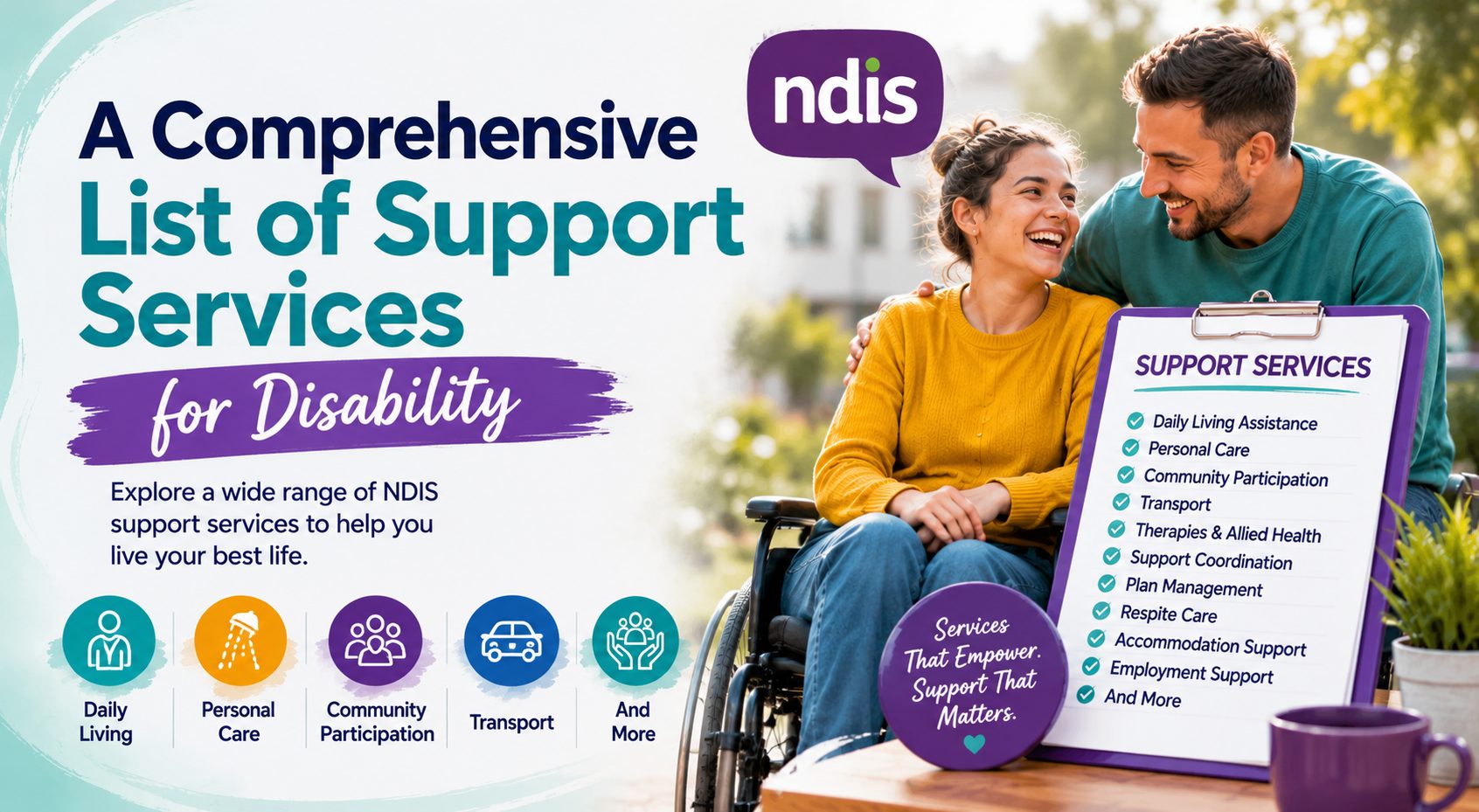
Finding the right help often starts with a simple question - what kinds of support are actually available? A clear list of support services for disability can make the search feel more manageable, whether you are arranging support for yourself, a family member or someone you care for.
In Australia, disability support is not one single service. It is a mix of everyday assistance, therapies, accommodation, community participation, transport, employment support and specialist services. Some supports may be funded through the NDIS, some may come through health or education systems, and others may be private or community-based. That means the best option is not always the first one you find. It depends on goals, location, funding, urgency and personal preference.
A practical list of support services for disability
The disability sector uses a lot of category names, but most families and participants are simply trying to answer a more direct question - who can help with daily life, health, independence and inclusion? The sections below break that down into the main service types you are likely to come across.
Daily living support
Daily living support covers help with tasks that many people do each day but may need assistance to manage safely or consistently. This can include personal care, showering, dressing, meal preparation, household cleaning, shopping and medication prompts. For some people, this support is occasional. For others, it is part of a regular routine delivered at home or in supported accommodation.
The right fit here often comes down to reliability and rapport. A provider may look suitable on paper, but if scheduling is inconsistent or communication is poor, the arrangement can quickly become stressful. Families often value continuity, while participants may prioritise flexibility and choice over who enters their home.
Community access and social participation
These services are designed to help people take part in community life, hobbies, recreation and social connections. That might mean one-to-one support to attend appointments or activities, or group programs built around shared interests, life skills and social confidence.
This area matters because support is not only about care needs. It is also about belonging, confidence and having a life that feels full. The strongest providers in this category usually balance safety with genuine participation, rather than treating every outing as a supervised task.
Support coordination and recovery coaching
When a plan includes multiple supports, support coordination can help participants understand their options, connect with providers and organise services more effectively. A support coordinator may help compare providers, explain service agreements and work through barriers when things are not going smoothly.
Psychosocial recovery coaches play a related but distinct role for eligible participants with psychosocial disability. Their work tends to focus more on capacity building, recovery goals and strengthening day-to-day supports around the participant.
Not everyone needs this type of service forever. Some people use it heavily at transition points, such as a first NDIS plan, a move to new accommodation or a change in health. Others prefer to self-manage once systems are in place.
Allied health and therapy services
Therapy services are often central to a participant's plan, especially where the goal is to build independence, communication, mobility or daily functioning. Common services include occupational therapy, physiotherapy, speech pathology, psychology, behavioural support and dietetics.
Each profession plays a different role. Occupational therapists often assess home modifications, assistive technology and functional capacity. Speech pathologists may support communication, swallowing and language development. Physiotherapists can assist with movement, strength and physical management. Psychologists and behaviour practitioners may support emotional wellbeing, regulation and positive behaviour strategies.
This is one area where specialisation matters. A provider with broad clinical skills may still not be the best fit if they lack experience with a specific disability, age group or communication need.
Assistive technology and equipment support
Assistive technology includes tools and equipment that help a person do things more safely, comfortably or independently. This can range from low-cost daily items through to specialised wheelchairs, communication devices, hoists, pressure care equipment and adaptive computer technology.
Support in this category is not limited to selling equipment. It may also involve assessment, prescription, setup, training, repairs and ongoing reviews. The most suitable option is not always the most advanced one. In many cases, success comes from choosing equipment that fits real daily routines rather than ideal scenarios.
Home modifications and accessibility services
For some participants, changing the home is what makes daily living possible. Home modification services may include rails, ramps, widened doorways, bathroom changes, kitchen adjustments and other accessibility improvements. These supports are usually tied to functional need and often involve assessment by an allied health professional.
The practical side matters here. Timelines, builder experience, approvals and communication between clinicians and trades can all affect outcomes. A well-designed modification should make the home easier to use without creating new complications for the household.
Disability support services list for housing and living
Housing is one of the most significant parts of the disability support system because it affects safety, routine, independence and long-term wellbeing. There are several categories, and they are not interchangeable.
Supported Independent Living
Supported Independent Living, often called SIL, usually involves paid support in a shared home or individual living arrangement. It focuses on help with daily tasks such as cooking, personal care and household routines. SIL is about the support provided in the home, not the building itself.
Specialist Disability Accommodation
Specialist Disability Accommodation, or SDA, refers to housing designed for people with extreme functional impairment or very high support needs. It is about the physical dwelling, including design features that improve accessibility and safety. A person may live in SDA and also receive SIL, but they are different supports.
Medium Term and Short Term Accommodation
Medium Term Accommodation can help bridge a gap while someone waits for a longer-term housing solution. Short Term Accommodation, including respite, can provide temporary care and a break for carers. These supports can be valuable, but availability often varies by region and demand can be high.
Individual living options
Some participants prefer arrangements outside traditional group homes. Individualised living options may involve host arrangements, co-residency or tailored support models built around the participant's preferences. These options can offer more choice, though they usually require stronger planning and the right mix of support.
Employment, education and skill-building services
A disability support system should not stop at care. Many participants want support that helps them study, work, volunteer or build practical life skills.
Employment services may include job readiness, workplace support, school leaver employment supports and help maintaining a role once employed. Some providers focus on open employment pathways, while others work within more structured disability employment settings. Neither is automatically better - the best option depends on goals, confidence, support needs and the kind of work the person wants.
Capacity-building supports can also include travel training, budgeting, cooking skills, communication development and decision-making support. These services are especially valuable when the aim is to reduce reliance on paid support over time.
Specialist and high-needs services
Some participants need support that goes beyond standard daily assistance. This can include complex bowel or continence care, high physical support, behavioural support, mental health-related disability services and nursing care. In these situations, provider experience, staffing capability and clinical oversight are especially important.
It is worth asking direct questions. Does the provider have staff trained for the required support? How are incidents handled? What happens if a regular worker is unavailable? A service may advertise broad capability, but high-needs support usually requires detail, not general promises.
How to use a list of support services for disability well
A long service list is only useful if it helps you narrow choices. Start with the outcome you need rather than the funding category. For example, "safer showering at home", "support after school", or "help finding suitable accommodation" is often a better starting point than searching broadly for disability services.
From there, compare providers by fit, not just by proximity. Location matters, especially in regional and remote areas, but so do communication style, special interests, accessibility, service hours and experience with similar participants. If you are comparing options through a disability directory such as Disability Providers, detailed profile information can make this process faster by showing specialties, service areas and contact options in one place.
It also helps to think in layers. A participant may need daily living support, allied health, transport help and social participation at the same time. Looking at each service in isolation can miss how they work together. The strongest support arrangements usually have some consistency across communication, planning and expectations.
If you are a provider, clarity matters just as much. Families and participants are often making decisions under pressure. A profile that clearly explains services, ages supported, availability, access methods and areas of expertise is more useful than one filled with general statements.
The disability sector can feel crowded, but the real task is not to find every service. It is to find the right combination of supports for the person, at the right time, in a way that is practical to maintain. A thoughtful search now can save a lot of frustration later.
Share on