
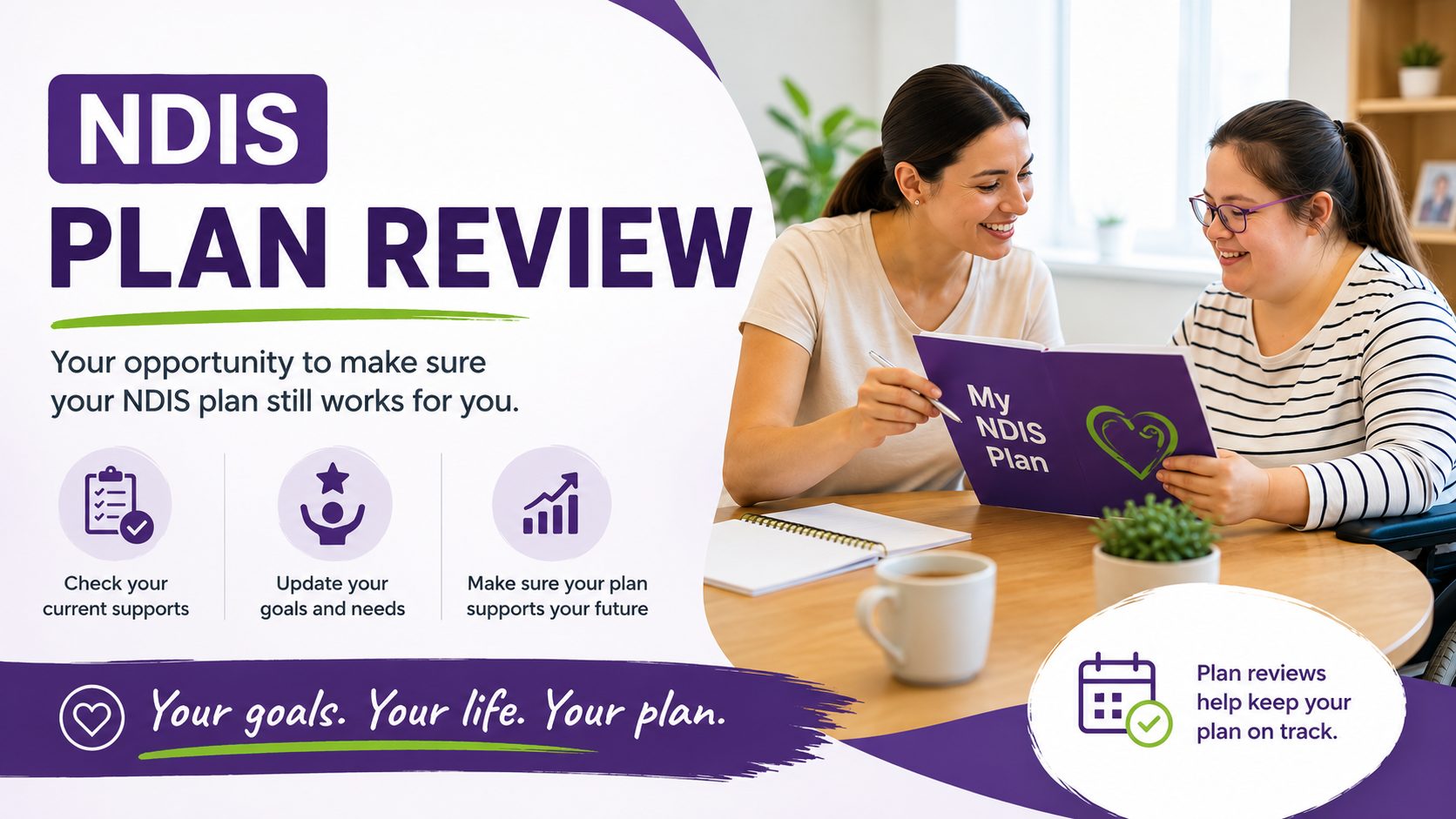
An NDIS Plan Review can feel stressful, especially if your current supports still do not fully cover what you need. For many participants and families, the worry is simple - will the next plan make life easier, or create more work? The good news is that a review is also your best chance to show what is working, what is missing, and what support you need next.
A review is not just an administrative step. It is the point where your everyday reality needs to be reflected properly in your funding and supports. If your situation has changed, if your goals have shifted, or if services have not been enough, the review is where that needs to be clearly explained.
What an NDIS Plan Review actually looks at
At its core, a plan review looks at whether your current NDIS plan is still right for your circumstances. That includes your goals, your functional needs, the supports you use, the supports you have not been able to access, and whether your funding is reasonable for the life you are trying to live.
This matters because a plan is not only about hours and budgets. It is also about outcomes. A child may need more therapy support because school demands have changed. An adult may need extra assistance at home after a health change. A participant living in Specialist Disability Accommodation may need a different mix of daily supports than they did a year ago. A review should take these changes seriously.
Not every review leads to major changes. Sometimes the plan stays broadly the same because the supports are working well. In other cases, small adjustments can make a real difference. And sometimes a participant needs a much stronger case for increased funding or different support categories.
When an NDIS Plan Review may be needed
Some reviews happen at the end of a plan period. Others happen because something significant has changed. That change might relate to your disability support needs, your living arrangements, your informal supports, your therapy recommendations, or your ability to take part in daily life.
Common reasons a review may be necessary include needing more support hours, no longer being able to rely on family in the same way, requiring new assistive technology, moving into different accommodation, changes in behaviour support needs, or finding that approved funding was not enough to access suitable services.
There is also a practical side to this. If you have funding in your plan but cannot find the right provider, the issue may not only be about budget. It may also be about whether the funded supports match what is realistically available in your area or suit your accessibility needs. That is why clear evidence and provider input can be so useful.
How to prepare for your NDIS Plan Review
The strongest plan reviews are usually built on evidence, not memory. It helps to start early and gather information over time rather than trying to remember everything the week before.
Begin with your current plan and read it closely. Look at your stated goals, your funded supports, and how the funding has actually been used. If part of the plan worked well, note that down. If a support was approved but did not meet your needs in practice, note that too. Reviews are not only about asking for more. They are about showing what has and has not worked.
Progress reports can make a big difference. Reports from occupational therapists, physiotherapists, speech pathologists, psychologists, behaviour support practitioners, support coordinators, and other treating professionals can help explain your functional needs in a way the NDIA can assess. The most useful reports are current, specific, and connected to everyday impact. They usually explain what the person can do, where they need help, what risks or barriers exist, and what support is recommended.
Your own observations matter as well. Keep notes about daily routines, missed activities, safety concerns, fatigue, transport issues, personal care challenges, community access, and pressure on family or carers. Real examples often tell the story more clearly than broad statements.
Evidence that can strengthen a review
Good evidence is not about volume. It is about relevance. A stack of paperwork will not help if it does not explain why support is needed.
The most useful evidence often includes recent allied health reports, support worker observations, incident records where relevant, letters from school or employment settings, behaviour support documentation, hospital discharge summaries when appropriate, and clear statements from carers about the support they provide and what is no longer sustainable.
If you are asking for a change, the evidence should connect the request to function and participation. For example, saying you want more support for community access is less persuasive than explaining that without a support worker you cannot safely attend appointments, shop for groceries, or take part in social activities because of mobility limits, sensory needs, behaviour support concerns, or communication barriers.
This is where details matter. Frequency matters. Risk matters. What happens when support is not available matters.
What can change in a review
A plan review can affect several parts of your plan. Your goals may be updated to better reflect where you are now. Funding amounts may increase, decrease, or stay the same. Different support categories may be added. In some cases, a support that was not funded previously may be considered if there is enough evidence.
The review may also change how supports are managed. Some participants stay with the same approach, while others move between agency-managed, plan-managed, and self-managed arrangements depending on what gives them the best access and flexibility.
It is also possible for a review to raise questions rather than provide immediate answers. You may be asked for more evidence, clarification, or updated assessments. That can be frustrating, but it is not uncommon. If the information is incomplete or unclear, the decision-maker may not have enough detail to support the requested changes.
Common mistakes that make reviews harder
One of the biggest problems is assuming the review meeting itself is where the case will be made. In reality, much of the outcome depends on what has been documented beforehand. If your reports are old, your goals are vague, or no one has clearly explained the impact of unmet support needs, the review can feel rushed and unsatisfying.
Another common issue is focusing only on diagnoses. The NDIS is more concerned with how disability affects daily function than with the label alone. A diagnosis may be important background, but it does not automatically explain why a person needs support with showering, meal preparation, transport, communication, regulation, or community participation.
People also sometimes understate their needs. That is understandable. Many participants and carers are used to pushing through, adapting, or doing unpaid extra work to keep things going. But a review needs an honest picture. If family members are exhausted, if routines are breaking down, or if safety is becoming a concern, that should be said clearly.
How providers and support coordinators can help
A good provider can do more than deliver services. They can document progress, identify gaps, and explain when the current level of support is not enough. Support coordinators, therapists, recovery coaches, and support workers may all contribute useful insight, depending on your circumstances.
For participants and families, one challenge is simply finding providers who understand your needs and can offer the right services. That might include allied health, behaviour support, support coordination, daily living supports, community access, or accommodation-related supports. Having access to clear provider information can make it easier to compare options and prepare for the next stage of your plan.
That is one reason many people use platforms like Disability Providers to search by service type, location, and support needs before or after a review. If your plan changes, being able to quickly identify suitable registered and non-registered providers can help you put the new funding to use sooner.
If the review outcome is not what you expected
Not every outcome feels fair, and not every plan reflects the evidence as clearly as it should. If funding is reduced, a requested support is declined, or the plan does not address major needs, it is worth reading the reasons carefully and getting advice on the next step.
The right response depends on the situation. Sometimes the issue is missing evidence that can be updated. Sometimes the wording in reports was too general. Sometimes the decision does not line up with the information provided. Acting quickly, staying organised, and keeping copies of documents can make the process easier if you need to challenge the outcome or seek further clarification.
A plan review is really about your day-to-day life
It is easy for an NDIS plan to start looking like a budget document, but the review is really about how you live. Whether you can get out of the house, build skills, manage safely at home, keep up with therapy, reduce pressure on carers, or take part in your community - that is what the plan should support.
The more clearly your review reflects real life, the better your chances of ending up with a plan that is practical, usable, and aligned with your needs. A strong review does not depend on saying the right buzzwords. It depends on showing, with honesty and evidence, what support makes daily life possible.
Share on