
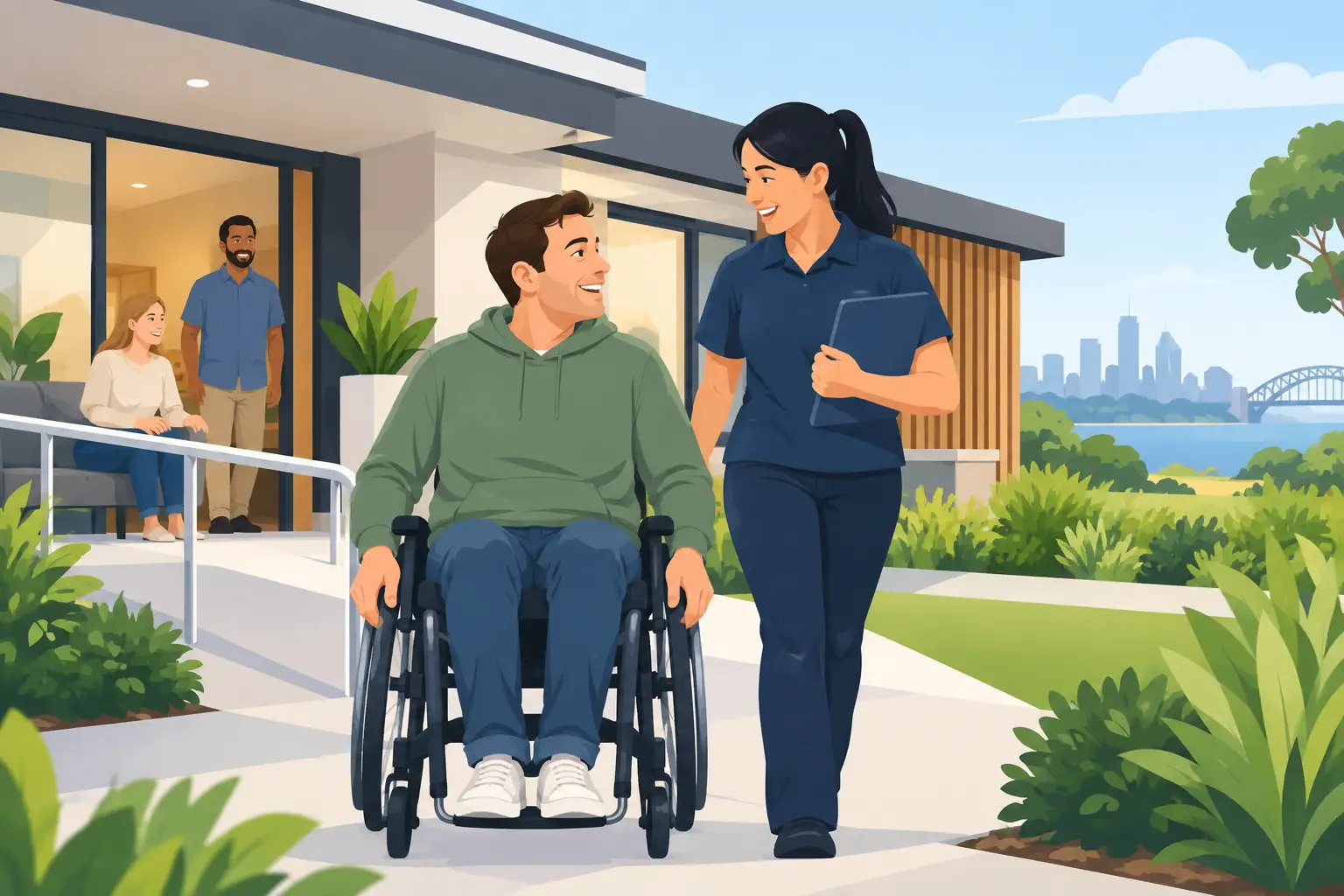
A home can make daily life safer, more private and more manageable. But finding the right housing through the NDIS can feel complicated, particularly when terms such as SDA, SIL and tenancy are used interchangeably. This SDA housing guide explains what Specialist Disability Accommodation is, who it may suit, and the practical questions to ask before choosing a home.
What is Specialist Disability Accommodation?
Specialist Disability Accommodation, usually called SDA, is housing designed for NDIS participants with very high support needs or an extreme functional impairment. It is not ordinary rental housing, and it is not a support service on its own. SDA funding contributes to the cost of the specialist building features that make a home suitable for a participant’s disability-related needs.
Depending on the dwelling, those features may include wider doorways, accessible bathrooms, hoists, reinforced walls, assistive technology, emergency backup systems or space for overnight support staff. The aim is to give eligible participants a home that supports safety, independence and choice.
SDA funding is paid to the registered SDA provider, rather than directly to the participant. You may still have personal housing costs, such as rent, utilities and a reasonable contribution towards everyday living expenses. The exact arrangement should be clearly explained before you agree to move in.
Who may be eligible for SDA funding?
SDA is available only to a small group of NDIS participants. The National Disability Insurance Agency considers whether specialist housing is reasonable and necessary because of a person’s disability support needs. Having an NDIS plan, needing daily support, or living in supported accommodation does not automatically mean someone will receive SDA funding.
Evidence is central to the decision. This can include functional assessments, reports from occupational therapists or other allied health professionals, information about current housing risks, and details about what support is needed across the day and night. Good evidence does more than describe a diagnosis. It explains how the person’s disability affects everyday life at home and why standard housing would not meet their needs.
For example, a report may describe difficulties transferring safely, the need for assistive technology, risks during an emergency, or the impact of inaccessible bathrooms and narrow doorways. It may also consider whether home modifications, informal support or other housing options could meet the person’s needs instead. The best option depends on the individual, not simply on the type of disability they have.
If SDA is included in a plan, the funding is generally linked to a particular design category and level of support need. It is worth checking the wording carefully, as it affects the properties that may be suitable.
The SDA design categories explained
SDA homes are grouped into design categories. Understanding these categories can help you and your support team focus your search.
Improved Liveability
Improved Liveability homes include design features for people with sensory, intellectual or cognitive disability. They may use clearer layouts, better visibility, appropriate lighting and features that support orientation and safety. These homes are not necessarily fully physically accessible.
Fully Accessible
Fully Accessible homes are designed for participants with significant physical disability. They typically provide wheelchair access, accessible kitchens and bathrooms, and space to move around safely.
Robust
Robust homes are built for people who may require a more resilient environment due to behaviours of concern. Features may include durable finishes, secure areas and layouts that support safety for the resident, visitors and staff. A well-designed Robust home should still feel like a home, rather than an institutional setting.
High Physical Support
High Physical Support homes include a high level of physical accessibility along with features such as ceiling hoist provisions, emergency power backup and technology that can support participants with very high physical support needs. Not every home will suit every person within this category, so the details matter.
SDA, SIL and tenancy are different things
One of the most common points of confusion is the relationship between SDA and Supported Independent Living, known as SIL. SDA is about the specialist dwelling. SIL is funding for the paid support workers who help with daily tasks in a shared or individual living arrangement, such as personal care, meal preparation and household routines.
A participant may have SDA funding without SIL, SIL without SDA, both, or neither. Some people live in an SDA home and use a different mix of supports, including individual supports, informal supports or other funded assistance. Do not assume that moving into an SDA property means you must use the housing provider’s support service.
Your tenancy is also separate from your support arrangements. Before signing anything, ask for clear information about the rental agreement, house rules, notice periods, visitors, pets, repairs, vacancy arrangements and what happens if your support needs change. You should understand who your landlord is, who provides your daily supports, and who to contact if there is a problem.
How to start your housing search
Start with what a good home looks like for you or the person you support. Location matters, but it is only one part of the decision. Consider access to family, friends, work, study, health appointments, community activities and transport. Think about household compatibility too. A property may meet the SDA category requirements yet still be the wrong fit if the routines, communication styles or shared living expectations do not feel right.
When comparing properties, ask whether the home is enrolled as SDA, which design category it is registered under, and whether the vacancy suits the funding in the participant’s plan. Ask for a tour where possible, including the bedroom, bathroom, outdoor areas, entry points and any staff spaces. Photos can be helpful, but they rarely show how a space feels to use.
It is also useful to ask how support is organised at the property. Is there an on-site overnight arrangement? Can you choose a separate provider for personal supports? Are assistive technology systems included, and who maintains them? If the home is shared, how are housemate matches approached and how are concerns resolved?
Directories can make this early research easier by allowing you to compare providers by location, accommodation type, accessibility features and service details. Disability Providers can help families, participants and support coordinators identify SDA providers and make informed enquiries without assuming every listing will suit every plan.
Questions to ask an SDA provider
Before progressing with a vacancy, take time to ask practical questions. The answers should be clear and provided without pressure.
- Is the dwelling enrolled as SDA, and what design category does it meet?
- Is the vacancy suitable for my NDIS funding and support requirements?
- What are the rent, utilities and other regular costs?
- Can I choose my own support provider, support coordinator and allied health professionals?
- Who manages repairs, maintenance and assistive technology?
- What tenancy agreement will I sign, and what happens if I want to leave?
- Are there current residents or prospective housemates, and how is compatibility considered?
- What accessibility features are in the home, and can they be adjusted for my needs?
A provider should also be willing to discuss realistic timeframes. New builds, enrolment processes, support arrangements and housemate matching can take time. If a property is available immediately, that can be helpful, but it should not replace a careful decision.
If SDA is not in your NDIS plan
Not receiving SDA funding does not mean there are no housing options. Depending on your circumstances, it may be worth discussing home modifications, assistive technology, individual disability supports, SIL, medium-term accommodation, tenancy supports or mainstream housing pathways with your support coordinator, planner or allied health team.
If you believe your current plan does not reflect your housing needs, gather updated evidence and request a plan reassessment or review through the appropriate NDIS process. Focus on the functional impact, safety concerns and the outcomes you are seeking. Specific examples from daily life are often more useful than broad statements that a current home is difficult.
Take your time with the decision
The right SDA home is about more than accessible features. It should support your routines, relationships, privacy and sense of control. Ask questions, involve people you trust, and make sure the tenancy and support arrangements are clear before you commit. A suitable home should make more of life possible on your terms.
Share on