
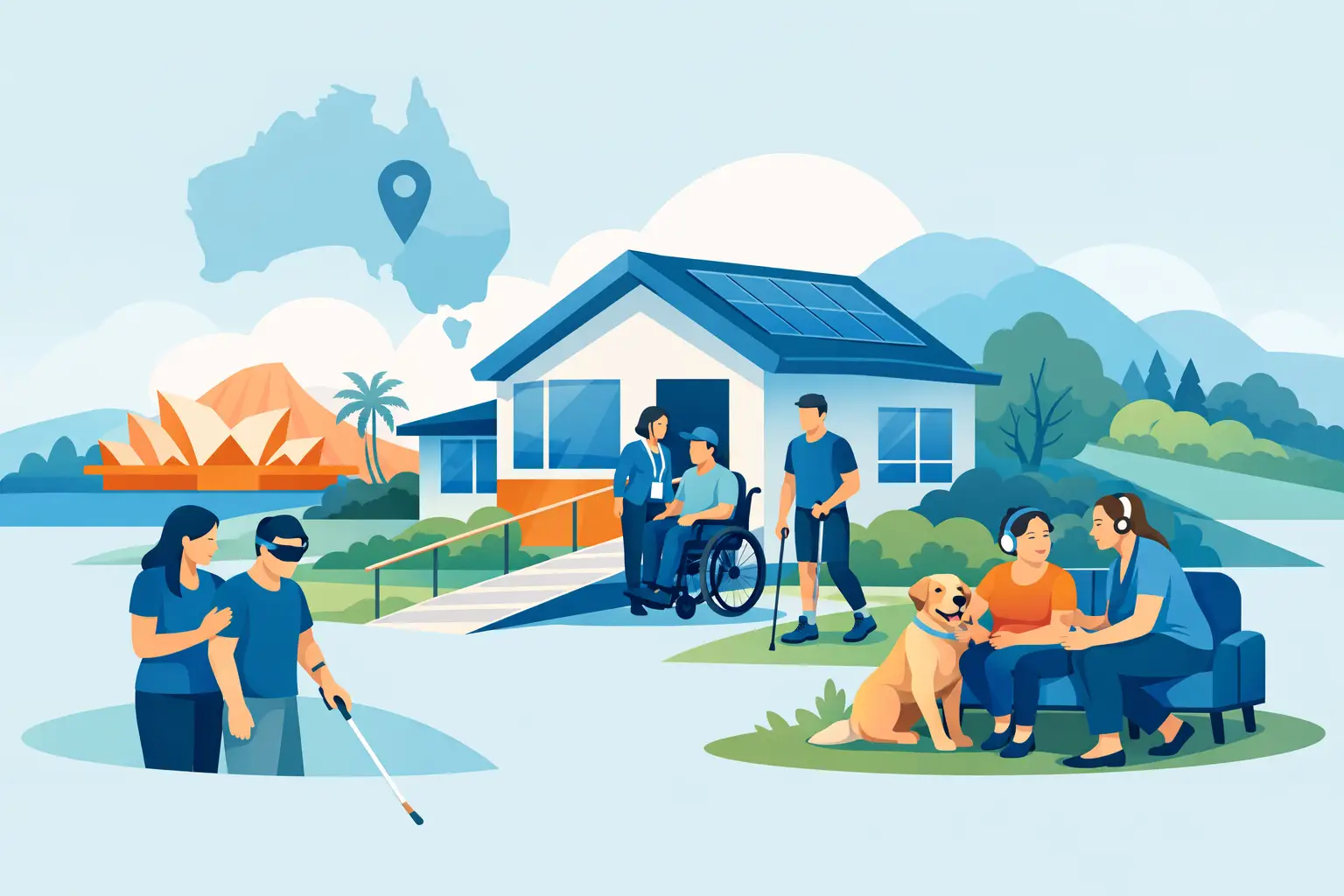
A standard rental that feels impossible to enter, a bathroom that cannot be used safely, or a home where support workers simply cannot do their job properly - these are often the moments people start asking when do you need SDA. For many NDIS participants, Specialist Disability Accommodation is not about preference. It is about whether a home can meet very high support needs and reduce serious daily barriers.
SDA stands for Specialist Disability Accommodation. In the NDIS, it refers to housing designed for people with extreme functional impairment or very high support needs. That might mean a home with wide spaces for mobility equipment, features that improve physical access, stronger construction for safety, or a layout that supports 24/7 assistance.
What often causes confusion is that SDA is not the same as general disability housing, Supported Independent Living, or everyday home modifications. It is a specific type of funded housing support, and only a small proportion of NDIS participants will be eligible. Understanding where it fits can make decisions clearer and less overwhelming.
When do you need SDA?
The short answer is that you may need SDA when ordinary housing cannot safely or reasonably support your disability-related needs, even with other supports in place. The key issue is not just diagnosis. It is how your disability affects daily living, safety, support delivery and long-term housing suitability.
For example, someone might need constant physical assistance with transfers, personal care and moving around the home. Another person may require a highly accessible bathroom and kitchen because a standard layout creates daily risks. In other situations, a participant may need housing designed to reduce harm, support complex behaviours, or allow support workers to provide care safely at all hours.
This is why SDA decisions are usually based on detailed evidence. The NDIS generally looks at whether the person has very high support needs or extreme functional impairment, and whether SDA is a reasonable and necessary support compared with other options.
What SDA is, and what it is not
SDA funding helps cover the cost of the specialised building itself. It does not usually pay for day-to-day support staff, groceries, personal bills or regular living costs. Participants still contribute a reasonable rent amount and other household expenses.
That distinction matters because people sometimes assume SDA and support services come as a package. They can work together, but they are different supports. A participant might live in an SDA dwelling and also receive Supported Independent Living or other in-home supports. Someone else may have high support needs but live in a different housing arrangement if that better suits their goals.
It also means not every accessible home is SDA. Some homes may be easier to use but not meet SDA design categories or funding rules. Likewise, some people can live well in mainstream housing with home modifications, assistive technology or tailored support, without needing SDA approval.
Signs SDA may be the right fit
There is no single checklist that settles the question, but certain patterns often point to SDA being worth exploring.
If a person cannot safely access key parts of their home, such as the bathroom, bedroom or kitchen, that is a strong sign the current environment may not be workable. If support workers cannot safely assist with transfers, personal care or overnight support because of the layout, the housing itself may be part of the problem.
Repeated hospital stays, injuries, near misses or carer strain linked to the home environment can also matter. So can situations where the person is effectively stuck at home because exits, doorways or shared spaces do not support mobility equipment. In some homes, poor design increases dependence rather than building independence. SDA may be considered when a better-designed property could improve safety, privacy, routine and choice.
For some participants, the issue is not only physical access. It may involve the need for a more durable environment, improved line of sight for support, or a setting that better manages complex behaviours and reduces risks to the person and others.
Who usually qualifies for SDA?
SDA is intended for a relatively small group of NDIS participants. In broad terms, eligibility usually centres on two pathways: extreme functional impairment or very high support needs.
Extreme functional impairment means the person has very substantial difficulty completing everyday activities, even with assistive technology, home modifications or support. Very high support needs generally refers to people who need a high level of person-to-person support for much of the day, often including overnight or constant assistance.
The NDIS does not approve SDA simply because housing is hard to find, private rentals are expensive, or a family home is no longer ideal. Those situations can be very real and very stressful, but SDA funding usually requires evidence that specialised housing is necessary because of disability-related needs.
This is one of the hardest parts for families and carers. A person may clearly need better housing, but the question the NDIS asks is narrower: does this person need specialised disability accommodation, and is it the most appropriate way to meet that need?
When do you need SDA instead of other housing supports?
This is where careful comparison matters. Sometimes the answer is not SDA, but another support combination.
If a participant can live safely in a mainstream home with rails, ramps, bathroom changes or other modifications, home modifications may be enough. If the main issue is support with daily tasks rather than the building itself, Supported Independent Living or in-home support may be the more relevant pathway. If someone needs help finding or keeping a home, tenancy and housing assistance may be more suitable.
SDA usually becomes relevant when those other options are unlikely to work well, are not safe, or would be less effective over time. For example, heavy modifications to an unsuitable home may still leave support workers with poor access or create an awkward layout that limits independence. In another case, a participant may need a design category that mainstream housing simply cannot deliver.
That is why assessments often look at alternatives. The NDIS wants to know whether the participant's needs can reasonably be met in another way, and what outcomes SDA would improve.
The evidence usually needed
SDA applications are evidence-heavy. Reports often come from occupational therapists, physiotherapists, psychologists, behaviour support practitioners, support coordinators and other allied health professionals, depending on the person's needs.
Good evidence explains how the current home affects daily life, safety and support delivery. It should describe the participant's functional needs in practical terms, not just list medical conditions. It also helps to show why other housing options or lower-level supports would not be enough.
Assessors often need to understand the difference a suitable SDA home would make. Would it reduce falls? Allow safer transfers? Improve sleep because overnight support can be delivered properly? Increase privacy and dignity during personal care? Support more independent movement around the home? These details matter.
What happens after SDA is approved
Approval does not automatically place someone into a property straight away. Once SDA is included in an NDIS plan, the next step is usually finding housing that matches the participant's needs, preferred location, living arrangement and design category.
That process can take time. Availability varies across Australia, and not every property suits every participant. Some people want to live alone, while others prefer shared housing. The right option depends on support compatibility, transport, community access, informal networks and personal goals - not just vacancy.
This is where a directory can help narrow the field. Comparing providers by location, accessibility features, support model and profile information can make the search more manageable, especially for families balancing urgency with the need to choose carefully.
Questions worth asking before you pursue SDA
If you are unsure whether SDA is the right path, it can help to ask a few grounded questions. Is the current home unsafe or unworkable because of disability-related needs? Could modifications or different supports solve the issue, or would the building still fall short? Does the participant need a home specifically designed to enable daily living and support delivery? And is there strong evidence to show that SDA would achieve better outcomes than other options?
These are not always easy questions, particularly when housing stress is already high. But they can help separate a general housing problem from a specialised accommodation need.
If you are at that stage, speaking with experienced allied health professionals, support coordinators and SDA providers can bring clarity. The goal is not to fit into a funding category for its own sake. It is to find housing that genuinely supports safety, independence, dignity and a workable everyday life.
The right home can change more than where someone lives. It can change how they move through the day, how support is delivered, and how much choice they have in the life they want to build.
Share on