
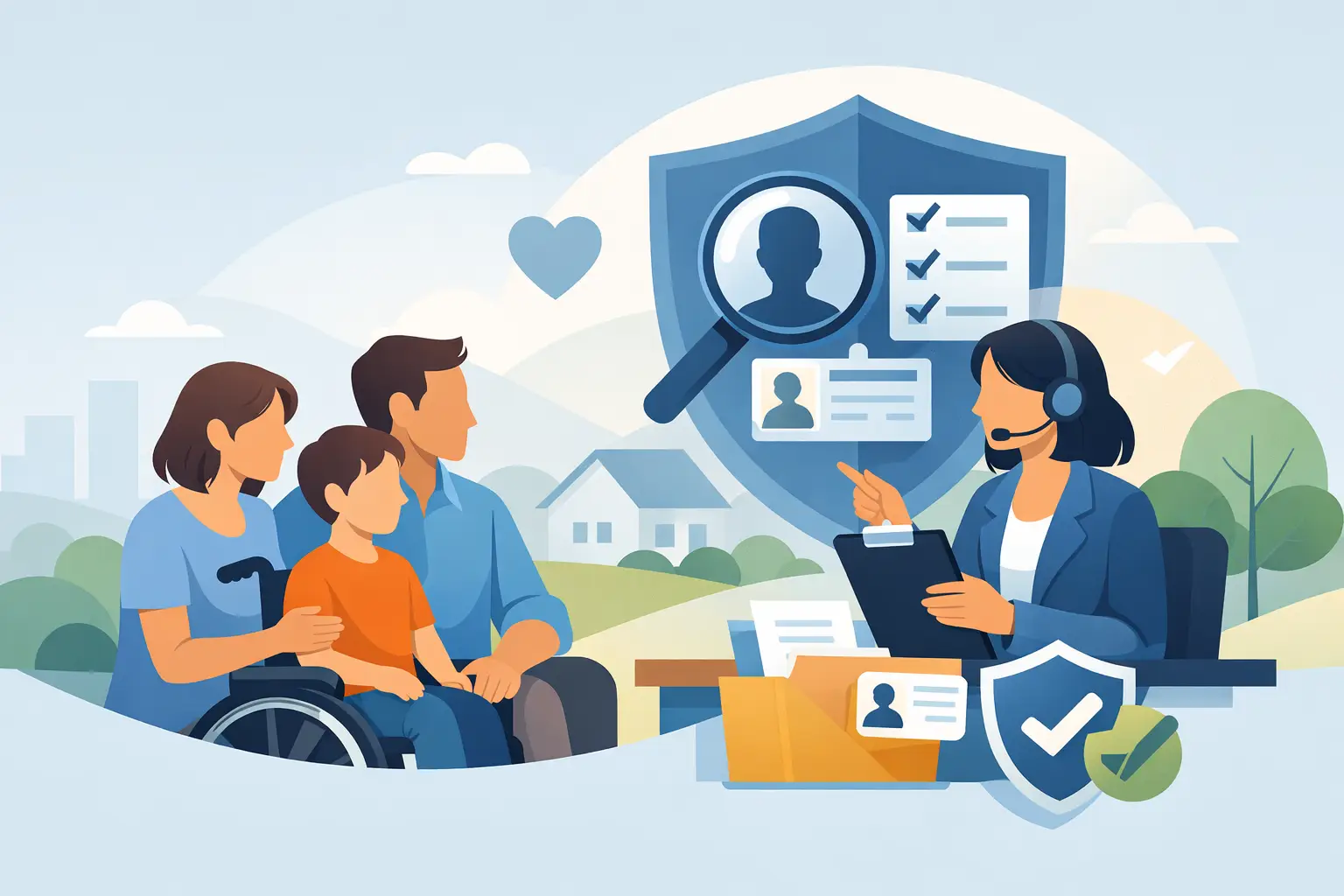
When you are trying to choose a disability support worker or provider, trust is not a small detail. It sits right alongside availability, location, experience and the kind of support your family actually needs. That is why an NDIS screening check guide can be so useful. It helps you understand what the check is, who needs it, and what it does - and does not - tell you about a person or service.
For many families, the phrase sounds more technical than it needs to be. In simple terms, NDIS worker screening is a national process used to assess whether a person can work in certain NDIS roles. It is designed to reduce the risk of harm to people with disability. If you are comparing providers, or you are a participant employing staff directly, knowing how screening works can make decisions feel more informed and less overwhelming.
What is the NDIS screening check?
The NDIS screening check, more accurately called an NDIS Worker Screening Check, is an assessment of whether a worker poses a risk to people with disability. It applies to workers in roles known as risk assessed roles. These are positions where a person may have more direct or sensitive contact with NDIS participants, including support work, personal care, behaviour support, transport assistance and some allied health or coordination roles, depending on the circumstances.
The check is more than a standard police check. A police check shows certain criminal history information at a point in time. NDIS worker screening goes further by considering a wider range of information, including relevant workplace misconduct, disciplinary findings and other serious matters. It is then assessed by the worker screening unit in the relevant state or territory.
That broader assessment matters. A clear result can provide reassurance, but it is not a guarantee that a worker will be the right fit for your needs. In the same way, if a provider says all staff are screened, that is an important starting point, not the only question worth asking.
Who needs an NDIS screening check?
This is where confusion often starts, because the answer depends on the worker's role and whether the provider is registered or unregistered.
Registered NDIS providers must make sure workers in risk assessed roles have an NDIS Worker Screening clearance, or an acceptable state or territory transitional check where that still applies. This is part of their compliance obligations.
For unregistered providers, the position can be different. In some cases, a worker may not be legally required to hold an NDIS screening clearance, even if families would reasonably expect some form of screening. That does not automatically mean the provider is unsafe. It does mean you may need to ask more questions about recruitment, supervision, references and safeguards.
If you are self-managing your NDIS funding and engaging workers directly, it is worth checking whether the role requires screening under your state or territory rules. Even where it is not strictly required, many participants and carers prefer workers who already hold a valid clearance.
An NDIS screening check guide to what is assessed
A useful NDIS screening check guide should explain that this is a risk assessment, not just a tick-box exercise. Screening units may consider criminal history, apprehended violence orders and similar court orders, findings from professional bodies, workplace misconduct, and information about previous reportable incidents. They can also look at whether there is a pattern of concerning behaviour.
The outcome is generally either a clearance or an exclusion. A clearance allows the person to work in risk assessed roles. An exclusion means they cannot work in those roles for a registered provider, and they are barred nationally from those positions.
There is an important trade-off here. Stronger screening can improve safety, but it can also add waiting periods and administrative burden for workers and providers. In a sector already facing workforce shortages in some regions and service types, delays can affect how quickly supports begin. That is frustrating for everyone involved, especially when families need help urgently. Even so, screening remains a key safeguard rather than an optional extra.
How the application process usually works
Most workers do not simply apply out of the blue. In many states and territories, they first need an employer or provider to start the process or verify that they are being engaged for a relevant role. After that, the worker completes an online application through the worker screening system for their state or territory.
They are usually asked to confirm their identity, provide personal details and consent to the screening process. Fees may apply, although arrangements vary. Volunteers may pay a reduced fee or no fee in some circumstances, but this depends on the role and local rules.
Once lodged, the application is assessed by the relevant screening unit. If granted, the worker receives a clearance that is recognised across Australia through the national system. That portability is helpful for workers who move between states or support participants in more than one jurisdiction.
Timeframes vary. Some checks are processed fairly quickly. Others take longer if there is information that needs closer review. If a provider tells you a worker's clearance is pending, it is reasonable to ask what duties that worker can and cannot perform while the outcome is still being assessed.
What families and carers should ask providers
Screening matters most when it sits alongside good provider practices. If you are choosing between providers, ask whether workers in participant-facing roles hold current NDIS screening clearances. If the provider is unregistered, ask what pre-employment checks they complete, how they supervise staff, and what happens if concerns are raised about a worker.
It also helps to ask practical questions. Will the same support worker attend regularly, or will multiple staff rotate through the service? How does the provider match workers to communication needs, cultural preferences, gender preferences or behaviour support requirements? A worker can be screened and still not be the best match for your household.
Profile details can help when you are comparing services. On a directory such as Disability Providers, families often look beyond compliance and focus on the full picture - service type, experience, location, accessibility features and whether the provider understands specific support needs. Screening is one part of trust, but consistency, communication and responsiveness matter just as much day to day.
What the check does not tell you
This is one of the most important parts of any NDIS screening check guide. A clearance does not mean the worker has specialist skills in autism support, complex physical disability, psychosocial disability or high-intensity supports. It does not tell you whether they are punctual, respectful, calm under pressure or a good communicator.
It also does not replace ongoing quality oversight. Good providers train staff, monitor complaints, review incidents and act quickly if something is not right. Families should still trust their observations. If a service feels rushed, dismissive or unsafe, the presence of a clearance does not cancel out those concerns.
On the other hand, if a newer provider is still building its reputation, strong screening and transparent policies can be reassuring. The key is to look at screening as one piece of a broader safety and suitability picture.
State and territory differences still matter
Although NDIS worker screening is part of a national approach, administration still happens through each state and territory. That means application steps, fees, identity checks and processing times can differ depending on where the worker is based.
For participants and carers, the practical point is simple: if a provider operates across more than one region, ask them how they manage compliance for all staff. This is especially relevant for organisations delivering supports in border areas or across multiple service locations.
If you are hiring independently, check the current requirements in your state or territory before relying on old advice. Rules and processes can change, and a worker who was suitable under a previous arrangement may need a different clearance now.
How screening fits into safer provider choice
If you are searching for support, it helps to think in layers. Screening is one layer. Registration status may be another, depending on the service and your plan management arrangement. After that come qualifications, lived experience, service flexibility, communication style and whether the provider can actually deliver support when and where you need it.
That is often why families compare several providers before making contact. A directory can make that easier by narrowing options by service category, location and support needs, then letting you review each provider's profile information in one place. The more clearly a provider explains its staffing, screening and participant approach, the easier it is to judge whether a conversation is worth having.
If the language around compliance ever feels hard to follow, that is understandable. The NDIS system has a lot of moving parts. But when a provider can explain screening clearly and answer questions without defensiveness, it usually says something positive about how they work with participants and families.
Choosing support is rarely just about ticking boxes. It is about finding people you can rely on, in a system that can already feel heavy. Understanding worker screening will not answer every question, but it can help you ask better ones - and that often leads to safer, more confident choices.
Share on